

Vacations are supposed to be fun, relaxing and restful times that you look forward to for weeks, maybe months or even years in advance. Travelling with chronic illness can be a little more tricky, but some extra planning and organisation can help you enjoy some rest and relaxation.
Here are my top ten tips for travelling with fibromyalgia, or other chronic conditions. I hope they are helpful!

Jump to:
- 1: Make sure any friends or family you are travelling with are aware of any needs or limitations you have
- 2: Shop around for travel and health insurance if you require it
- 3: Prepare medications in advance, speak to you doctor if necessary
- 4: Prepare any other items that help you manage your conditions
- 5: Take items with you for rest periods
- 6: Research your destination thoroughly
- 7: Consider travelling in the most comfortable way that you can afford
- 8: Pick a hotel or other accommodation that you can rest in
- 9: Plan any excursions ahead of time
- 10: Take snacks!
- 💬 Comments
1: Make sure any friends or family you are travelling with are aware of any needs or limitations you have
Personally, I have found this to be super-important, and it's the reason I've put it first on this list. A few years ago I went on vacation and it was really difficult. The person I was with, while aware of my health issues, had a very different idea of how we were going to spend our time away, and it involved a great deal more activity and late nights than I can handle. Cue an argument, tears (me, not them) and a wish to go home early.
It was resolved in the end, but I know now that I should have made clear the level of activity that is suitable for me, the fact that I have to eat a low histamine diet, which is limiting in terms of restaurant choices, and that a day or two of true relaxation between more strenuous activity days would be very beneficial for me.
So my advice would be to have a conversation, or several, with the people you are travelling with, and let them know your conditions and any limitations. It may be that you have a vestibular disorder, so you don't want to go on a boat, or you may have mast cell activation syndrome and so prefer to go self-catering rather than full-board at a hotel. Try not to worry about having that conversation. It will prevent a great deal of misunderstandings, or even arguments, if everyone is on the same page from the beginning.
2: Shop around for travel and health insurance if you require it
Travel and health insurance - the bane of vacations for all. More so, probably, for people with health issues. Personally, I haven't left the UK since most of my conditions have been diagnosed, so I haven't run the gauntlet on this yet.
From everything I have heard though, including from a family member with a chronic illness, the best advice is to shop around for a decent price for good cover. Especially if you are travelling outside Europe (if you live within it). Have a google of insurance companies that specialise in offering cover for people with existing conditions as they are likely to be both cheaper, and more responsive if you need to make a claim.
3: Prepare medications in advance, speak to you doctor if necessary
Going on vacation with chronic illness means that preparation is vital! A few weeks before I go on vacation I make sure I do a 'medication inventory' and check that I have enough of all my medications to last me until I return. Instead of taking numerous packets of medication with me, I put them into my Sistema 'pots to go' for each day so that they are organised and ready to go. A visit to the doctors to get sufficient medication is advisable if you are running low on anything, or to stock up on emergency medications if you have a condition such as migraine when you may want to take abortive meds with you.
4: Prepare any other items that help you manage your conditions
Everyone with chronic illness has a few favourite products that help them with symptoms, I would suspect. Personally for me, as someone with classic and vestibular migraine, the following are essential items:
Blisslets travel bands for nausea while travelling (for 15% off use the code fibrofog)
Headache cap to calm the hot head feeling of an attack.
4 Head Stick - easy to have in your bag and swipe on the forehead when needed!
Don't take a risk and leave any easily transportable items that may help at home in the hope you won't need them. it is far better to err on the side of caution and be prepared. I do know someone that always takes a weighted blanket with them on vacation, but I don't think that would fit in my luggage!
5: Take items with you for rest periods
Rest periods are pretty essential if you have chronic illness, and a vacation is the perfect time to relax! Stock up on novels and magazines, and download podcasts, meditation apps and music. If your friends / relatives are off on an excursion that you prefer to sit out on, why not do some gentle yoga in your hotel room? Or relax by the pool with a novel, cook book, colouring book, knitting, sewing or whatever takes your fancy. After all, we can do whatever makes us happy on vacation!

6: Research your destination thoroughly
Each to their own, but I suspect that the majority of people with chronic illness are unlikely to want to spend their vacation in Ibiza partying into the night. If you do, then have an amazing time! But I'm imagining it isn't the case for a lot of us. So research holiday destinations that are most suitable for your needs, and that will be the most relaxing and enjoyable for you. There's so much choice available, so have a good google!
A few years ago I spent a week in the south of France which was perfect as it has the right mix of peaceful countryside and easy proximity to the town for cafes, restaurants and shops to wander around.
7: Consider travelling in the most comfortable way that you can afford
Depending on finances and your destination, it may be an idea to travel in the most comfortable way that suits your budget. On the Eurostar I tend to upgrade to premium economy unless the prices are too high. It is a bit more expensive, but there are less people in the carriage, which means less noise and commotion. There are also bigger seats, and you are served a meal or snack. All of that means I arrive at my destination a little less tired, and a little less stressed. And that means I start my vacation in a better mood and more rested.
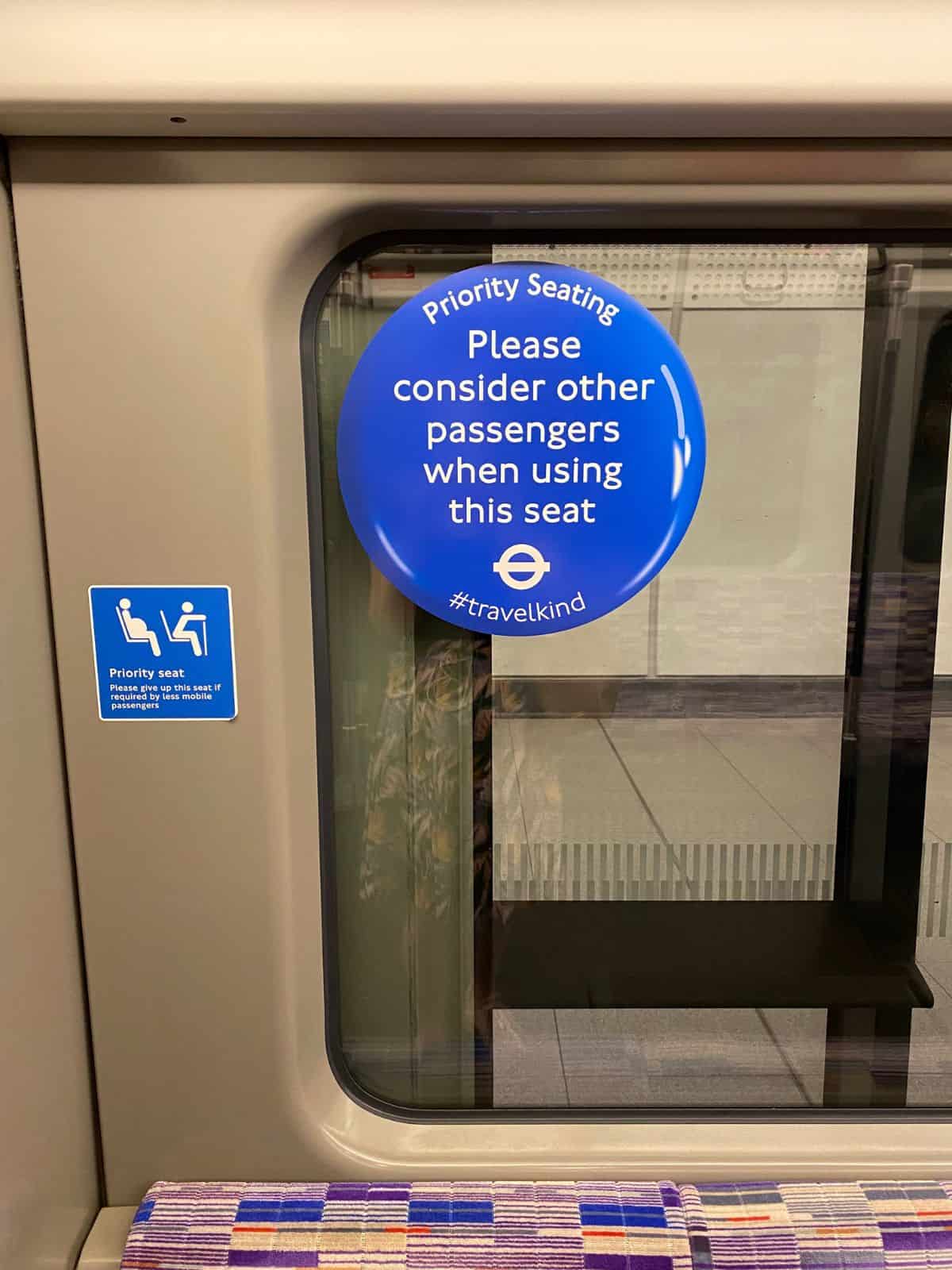
If it is appropriate, it may well be worth contacting an airline or other transport provider and letting them know that you have health issues. They may be able to provide you with assistance such as priority boarding, or someone to help you through the airport. If you are in the UK, you could also consider applying for a TFL 'please offer me a seat' badge. Although these are meant for travel in London on trains, tubes etc, it would still be useful to alert people to your need to be seated and you might get a bit of extra help from the airline, or however else you are travelling.
8: Pick a hotel or other accommodation that you can rest in
Again, this is personal, but I know that I always make sure that I choose a hotel where I can rest in peace if need be. Going on vacation with chronic illness means anticipating flare-ups of symptoms. If a migraine strikes, or other flare-up of symptoms, it is unlikely that you will feel comfortable in a shared hostel or noisy camp-site. Some hotels have lounges that are good for sitting and reading or listening to music or, as I always prefer, a swimming pool where you can rest up on a sun lounger under an umbrella with a book if you want a quiet afternoon.
9: Plan any excursions ahead of time
As a follow-on from the first point, if you are going on vacation with chronic illness then planning any excursions ahead of time is a good idea so that you and your friends / relatives have a rough schedule of vacation activities. It helps let others know what kinds of activities that you are comfortable to do, and will enjoy, as well as helping you to pace your time and not burn yourself out. It is often helpful to plan lighter activity days, or complete rest days, before and after a more adventurous excursion. That way you can still enjoy activities, and hopefully do so without completely sapping your energy.
10: Take snacks!
If your diet is affected by your conditions, such as if you have to eat gluten-free, dairy-free or low histamine, then my top tip is to take plenty of snacks with you! My suitcase is always full of suitable snacks in case options are limited where I am, including items like my seed crackers and energy balls.
As someone with POTS, I still to need to make sure my salt levels are kept high. I really dislike the strong taste of regular table salt, so I'm going to take some pink Himalayan salt with me in a storage pot that I can keep in my bag. Far less salty tasting, and it's full of good minerals as well!
For snacks, I'm going to take pumpkin seeds (pepitas), almonds and dried coconut as they can either be used as snacks by themselves or added to porridge, cereals, or salads. There's nothing worse than feeling hungry on vacation, so allow a little section of your suitcase to be dedicated to snacks!
Do let me know if you have any tips for travel with chronic illness below!
I'm active on Instagram, Facebook and Twitter if you would like to follow along for more content like this.
Please follow the advice of your doctor as to all medical treatments, supplements, and dietary choices, as set out in my disclaimer. I am not a medical professional, and this is simply my story and the resources that are helpful to me.


Comments
No Comments